Ethics & Security in Big Data
1. what is Ethics & Security in Big Data?
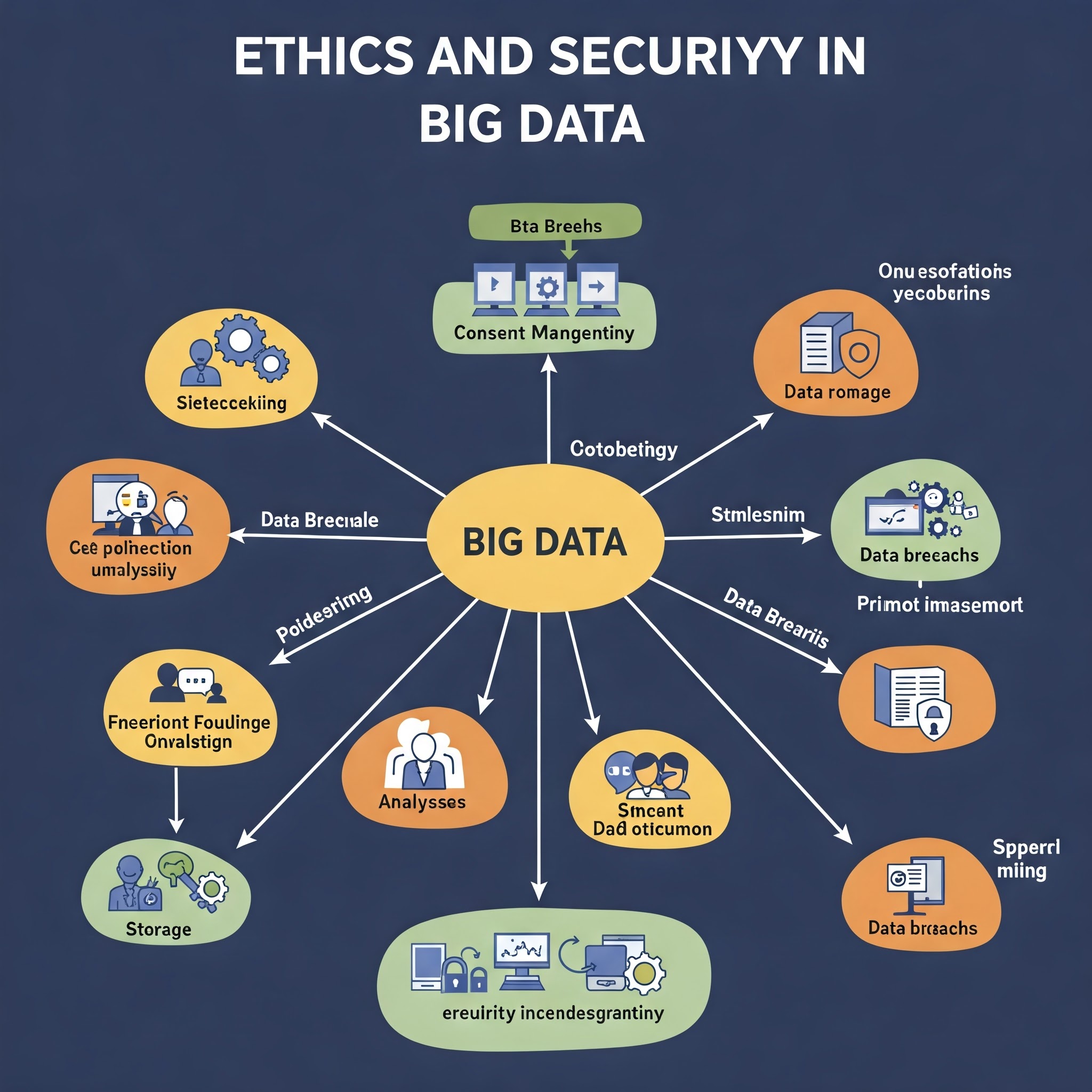
Ethics & Security in Big Datarefers to the responsible and secure use of large volumes of data while ensuring that individuals' privacy and rights are protected. As organizations collect and analyze vast amounts of data from various sources, including personal, financial, and behavioral information, they face growing challenges related to data privacy, ethical concerns, and security risks. Big data technologies can provide businesses with valuable insights, but improper handling of this data can lead to breaches of trust, legal consequences, and harm to individuals. Therefore, addressing the ethical implications and ensuring robust security measures are essential in the management and use of big data.
From an ethical perspective, one of the main concerns is privacy. With the ability to gather and analyze data at scale, businesses may unintentionally invade personal privacy or misuse sensitive information. It is crucial for organizations to ensure that data collection and usage comply with data protection laws, such as the General Data Protection Regulation (GDPR) in the European Union. Ethical concerns also arise when companies use data for discriminatory practices or bias. For instance, algorithms that rely on historical data may perpetuate existing biases in decision-making, leading to unfair outcomes. Ensuring that big data practices align with ethical standards requires transparency, accountability, and a commitment to protecting individuals' rights and dignity.
From a security standpoint, big data introduces several risks, particularly related to data breaches and cyberattacks. As organizations store sensitive data on centralized or cloud platforms, these systems become prime targets for hackers. Ensuring the security of big data involves implementing robust measures such as data encryption, access controls, secure data storage, and data masking to prevent unauthorized access and mitigate risks. Additionally, big data systems should be regularly monitored for anomalies and potential vulnerabilities. The sheer volume and complexity of big data also make traditional security approaches less effective, requiring advanced security technologies such as AI-driven threat detection and blockchain for ensuring the integrity and confidentiality of data. To address these challenges, businesses must adopt a security-first approach and collaborate with cybersecurity experts to safeguard data from both internal and external threats.
2.Data Privacy Concerns
Data Privacy Concerns
refer to the issues and risks associated with the collection, storage, and use of personal and sensitive data, especially in the context of big data and digital technologies. As organizations increasingly gather vast amounts of data from individuals, there is a growing need to protect people's personal information from unauthorized access, misuse, and exploitation. Without adequate data privacy protections, individuals' rights may be violated, leading to potential harm, such as identity theft, financial fraud, and unwanted surveillance. This is why data privacy has become a critical issue for businesses, regulators, and consumers alike
One of the main data privacy concerns is the lack of consent. Often, individuals are unaware of how their data is being collected, stored, and used, or they may not have explicitly given permission for certain uses of their data. For example, users might unknowingly agree to data collection practices when accepting terms and conditions of a service or application. This lack of informed consent can lead to misuse of personal information, such as data being sold to third parties without the individual's knowledge. To address this concern, privacy regulations like GDPR require businesses to obtain explicit consent from users before collecting their data and to give them the right to withdraw consent at any time. It also mandates that individuals be informed about how their data will be used and that their privacy rights are respected.
Another significant concern is data breaches and unauthorized access. With the increasing volume and complexity of data being generated, there are greater risks of unauthorized access to sensitive personal information. Cybercriminals may exploit vulnerabilities in big data systems to steal or manipulate data for malicious purposes, leading to privacy violations and financial losses for individuals. Data breaches can also result in reputational damage for organizations, which may lose the trust of their customers and partners. To mitigate these risks, businesses must implement strong cybersecurity measures, including encryption, access controls, and regular audits of their data storage and handling practices. Additionally, data anonymization techniques can help protect individual privacy by removing personally identifiable information (PII) from datasets used for analysis, reducing the risk of harm in case of a breach.
3.GDPR & CCPA Compliance
GDPR & CCPA Compliance
refers to the adherence to two of the most prominent data privacy regulations: the General Data Protection Regulation (GDPR) and the California Consumer Privacy Act (CCPA). These regulations are designed to enhance the protection of personal data and ensure individuals' rights to privacy in the digital age. Both laws focus on giving users more control over their data and placing more responsibility on businesses to handle data securely and transparently.
The GDPR, which came into effect in May 2018, is a regulation by the European Union (EU) that applies to all businesses processing personal data of individuals located within the EU, regardless of where the business is based. One of its core principles is that individuals should have control over their personal data, and businesses must ensure transparency about how this data is collected, used, and shared. GDPR requires organizations to obtain explicit consent from users before collecting their data and gives individuals the right to access, correct, delete, and restrict the processing of their data. It also introduces the concept of data protection by design and data protection by default, which means that privacy should be integrated into the business processes and technologies from the outset. Non-compliance with GDPR can result in heavy fines, up to 4% of a company’s global annual turnover or €20 million, whichever is greater.
On the other hand, the CCPA, effective since January 1, 2020, is a privacy law designed to protect the personal information of California residents. The CCPA provides consumers with rights similar to GDPR, such as the right to know what personal data is being collected, the right to request the deletion of personal data, and the right to opt out of the sale of their data. It also mandates that businesses disclose their data practices in clear and accessible privacy policies. However, unlike GDPR, CCPA applies only to for-profit businesses that collect personal information from California residents, meet certain revenue thresholds, or handle large amounts of personal data. Non-compliance with CCPA can result in penalties of up to $7,500 per violation, along with potential lawsuits for data breaches.

GDPR & CCPA Compliance
refers to the adherence to two of the most prominent data privacy regulations: the General Data Protection Regulation (GDPR) and the California Consumer Privacy Act (CCPA). These regulations are designed to enhance the protection of personal data and ensure individuals' rights to privacy in the digital age. Both laws focus on giving users more control over their data and placing more responsibility on businesses to handle data securely and transparently.
The GDPR, which came into effect in May 2018, is a regulation by the European Union (EU) that applies to all businesses processing personal data of individuals located within the EU, regardless of where the business is based. One of its core principles is that individuals should have control over their personal data, and businesses must ensure transparency about how this data is collected, used, and shared. GDPR requires organizations to obtain explicit consent from users before collecting their data and gives individuals the right to access, correct, delete, and restrict the processing of their data. It also introduces the concept of data protection by design and data protection by default, which means that privacy should be integrated into the business processes and technologies from the outset. Non-compliance with GDPR can result in heavy fines, up to 4% of a company’s global annual turnover or €20 million, whichever is greater.
On the other hand, the CCPA, effective since January 1, 2020, is a privacy law designed to protect the personal information of California residents. The CCPA provides consumers with rights similar to GDPR, such as the right to know what personal data is being collected, the right to request the deletion of personal data, and the right to opt out of the sale of their data. It also mandates that businesses disclose their data practices in clear and accessible privacy policies. However, unlike GDPR, CCPA applies only to for-profit businesses that collect personal information from California residents, meet certain revenue thresholds, or handle large amounts of personal data. Non-compliance with CCPA can result in penalties of up to $7,500 per violation, along with potential lawsuits for data breaches.
4.Secure Data Sharing
Secure Data Sharing
refers to the practices, technologies, and protocols used to ensure that sensitive and personal data is exchanged between parties in a secure, controlled, and privacy-compliant manner. It is crucial in today's digital landscape where data is shared across multiple platforms, services, and organizations. Whether for business partnerships, data analytics, or collaborative research, secure data sharing ensures that data is protected from unauthorized access, misuse, and breaches. This becomes particularly important when sharing personal or confidential information, such as customer data, health records, financial data, or intellectual property.
One of the foundational principles of secure data sharing is the use of encryption. Data should be encrypted both at rest (when stored) and in transit (when being transferred) to ensure that it remains protected even if intercepted by malicious actors. End-to-end encryption is a widely used approach, ensuring that only the intended recipients have the keys to decrypt and access the data. For organizations that share sensitive data with third parties, encryption is essential to protect the integrity and confidentiality of the information. Additionally, businesses can use data anonymization or pseudonymization techniques to obscure personal identifiers, making it impossible for unauthorized users to link the data back to specific individuals while still allowing meaningful analysis or use of the data.
Another key aspect of secure data sharing is access control. It’s essential to ensure that only authorized users or systems can access the shared data. This can be achieved by implementing strong authentication methods such as multi-factor authentication (MFA), ensuring that users are who they say they are before gaining access to sensitive data. Additionally, role-based access control (RBAC) can be employed to limit the scope of data each user can access, ensuring that they only see the data necessary for their job functions. Using data sharing agreements with third parties helps ensure that data is shared according to pre-agreed terms, including who has access to what data, for what purpose, and under what conditions, and specifies security standards to maintain confidentiality.
5.Data Breaches & Protection
Fraud Detection
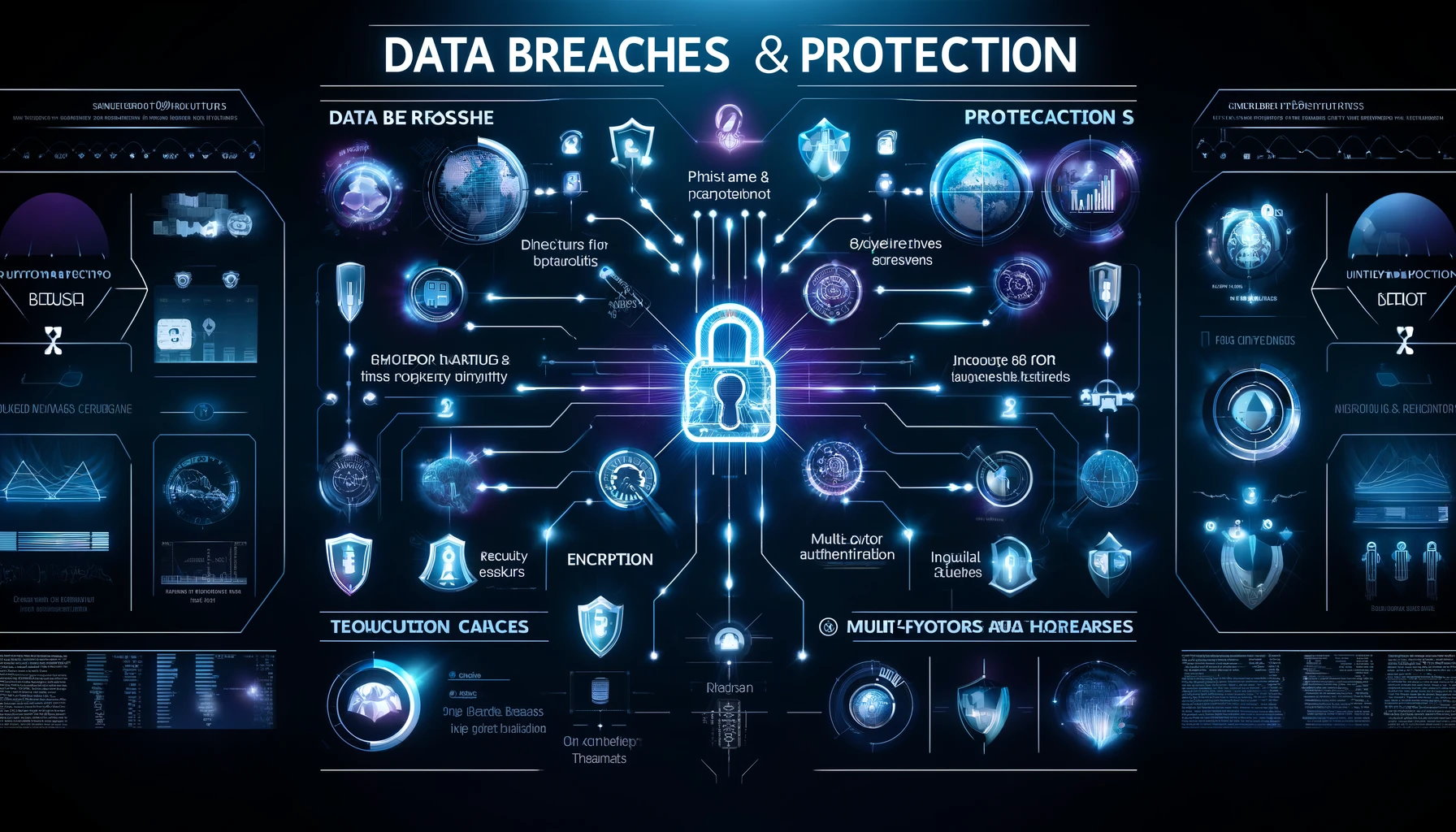
are critical aspects of modern cybersecurity that focus on safeguarding sensitive information from unauthorized access, theft, or exposure. A data breach occurs when confidential data, such as personal, financial, or health information, is accessed, disclosed, or used without authorization. These breaches can happen through various means, including hacking, insider threats, physical theft, or even human error. The consequences of a data breach can be severe, leading to financial loss, reputational damage, legal penalties, and loss of customer trust. For businesses and organizations, protecting sensitive data is paramount to maintaining compliance with data privacy laws and ensuring the privacy and security of their stakeholders.
The prevention of data breaches requires a multi-layered approach, starting with strong access controls. Organizations must enforce robust authentication methods such as multi-factor authentication (MFA) and password management policies to ensure only authorized personnel can access sensitive information. Encryption plays a pivotal role in data protection, ensuring that even if data is intercepted, it cannot be read without the proper decryption keys. Data masking and tokenization can also be used to protect sensitive information by replacing it with fictitious data or tokens, ensuring that real data is not exposed in non-production environments. Additionally, organizations should implement regular vulnerability assessments and penetration testing to identify weaknesses in their systems that could be exploited by attackers.
In the event of a data breach, the response plan is crucial for minimizing damage and ensuring compliance with regulations. A well-defined incident response plan (IRP) should include steps for quickly identifying and containing the breach, notifying affected individuals and relevant authorities, and addressing the root cause of the breach. Under regulations like the General Data Protection Regulation (GDPR) and the California Consumer Privacy Act (CCPA), organizations may be required to notify individuals and regulatory bodies within a specified time frame after discovering a breach. Breach notification must clearly explain what happened, what data was affected, and what steps are being taken to mitigate the impact. Failure to promptly address and report a breach can result in significant fines and reputational damage.
6.AI Bias in Data Analysis
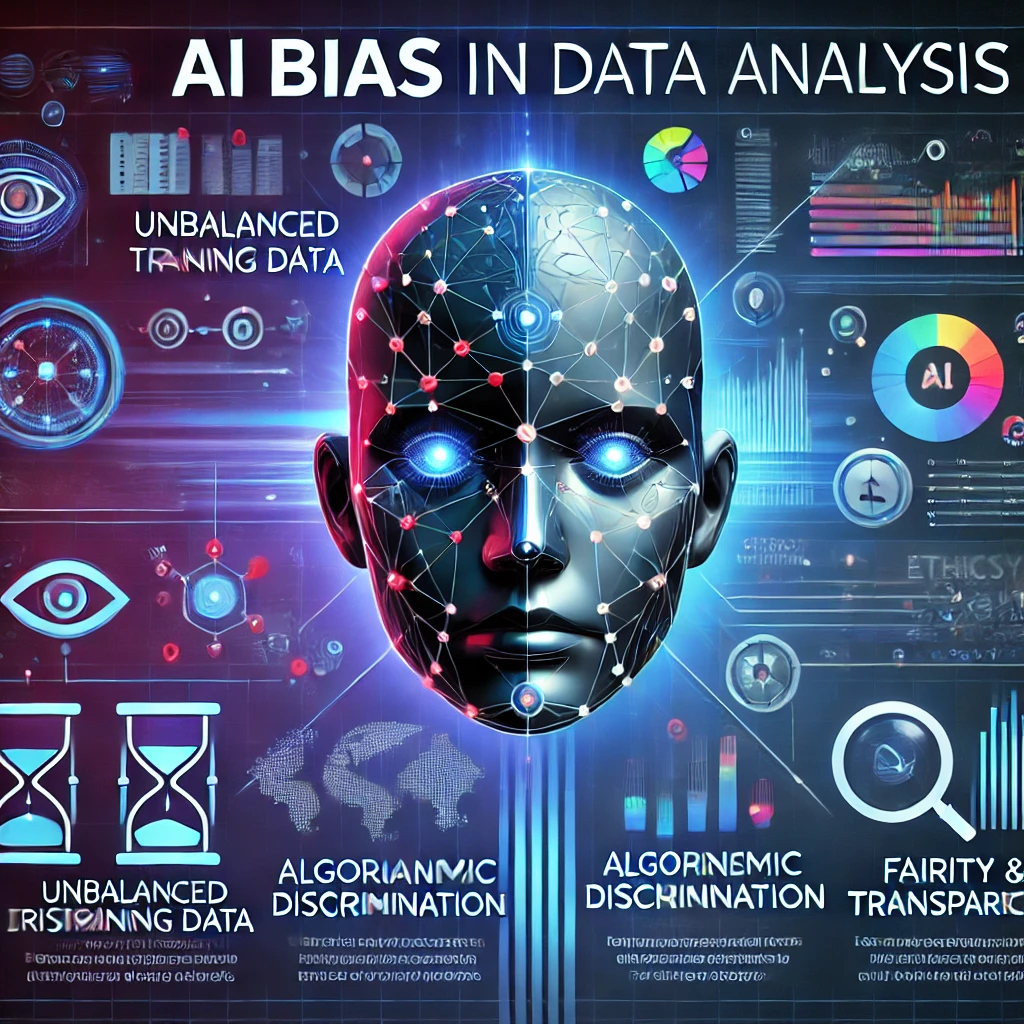
AI Bias in Data Analysis
refers to the systematic and unfair discrimination that can occur when artificial intelligence (AI) models or algorithms are trained on biased or unrepresentative datasets, leading to incorrect or skewed results. AI systems rely on large datasets to learn patterns and make decisions, but if the data used to train these models contains inherent biases—whether due to historical inequalities, sampling errors, or cultural assumptions—the AI will likely reflect these biases in its outputs. This can result in unintended consequences, such as discrimination against certain demographic groups, inaccurate predictions, or decisions that perpetuate societal inequities. For example, an AI hiring tool trained on historical employment data may inadvertently favor male candidates over female candidates due to past gender imbalances in the workforce.
The causes of AI bias in data analysis are multifaceted. One of the primary causes is the data itself—if the data is skewed, incomplete, or unrepresentative of the real-world population, the AI model will learn those inaccuracies and reinforce them. For instance, facial recognition algorithms have been shown to have higher error rates for people of color and women, primarily because the training datasets used to develop these systems predominantly consist of images of lighter-skinned men. Another source of bias is the algorithm design itself, where the choices made by developers in selecting features, training methods, or evaluation metrics can introduce unintended bias. Even subtle biases in the way algorithms are structured can lead to significant disparities in results. Moreover, human biases in data labeling or annotation, whether intentional or unintentional, can further perpetuate biased outcomes in AI models.
To mitigate AI bias, it's crucial to adopt ethical and methodological approaches during both the data collection and model training phases. One important strategy is to use diverse, representative datasets that reflect the varied experiences, identities, and backgrounds of the population. Ensuring diversity in training data helps prevent algorithms from learning harmful stereotypes and ensures that the model performs equitably across different groups. Another key approach is bias detection and auditing, where AI systems are regularly tested for fairness, transparency, and accountability. Techniques like algorithmic fairness testing and explainable AI (XAI) help in identifying and addressing any potential biases in models. Developers should also employ methods such as de-biasing algorithms or counterfactual analysis to minimize biases by adjusting the models and their predictions accordingly.
7.Data Anonymization Techniques
Data Anonymization Techniques
are methods used to protect personal or sensitive information in datasets by removing or modifying identifiable elements, ensuring that the data can no longer be traced back to an individual. This is particularly crucial when dealing with privacy regulations such as the General Data Protection Regulation (GDPR), which mandates that organizations take necessary precautions to prevent the misuse of personal data. The goal of data anonymization is to balance the need for data analysis and sharing with the requirement to protect individuals' privacy. By anonymizing data, organizations can enable broader data usage for research, analysis, and machine learning while minimizing the risks of data breaches or privacy violations.
One common data anonymization technique is data masking, which involves substituting sensitive data with fictitious but realistic values. For example, real names or addresses can be replaced with randomly generated characters or similar data that do not identify an individual. Another technique is pseudonymization, which involves replacing identifiable information with pseudonyms or unique identifiers that are not linked to a person’s identity without additional information. Unlike complete anonymization, pseudonymization allows data to be re-identified under certain conditions, making it useful in scenarios where it is important to track or verify individuals without revealing their identities outright. Generalization is another technique, where specific data points are replaced with broader categories or ranges. For instance, an individual’s exact age can be replaced with an age group, like 30-40, thereby preserving statistical trends without exposing personal details.
Differential privacy is a more advanced and mathematically rigorous technique, designed to allow organizations to analyze data while providing strong privacy guarantees. In this method, noise or random data is added to the original dataset, ensuring that the presence or absence of any individual does not significantly affect the results of the analysis. This ensures that the privacy of individuals is protected while still allowing for useful insights to be derived from large datasets. Similarly, k-anonymity is a technique where data is modified so that each individual cannot be distinguished from at least k-1 other individuals in the dataset, making it harder to identify any specific person. l-diversity and t-closeness are extensions of k-anonymity that address its limitations, focusing on ensuring that sensitive attributes in anonymized data remain diverse and similar to the original data distribution, further enhancing privacy protection.
8.Big Data in Cybersecurity
Big Data in Cybersecurityplays a crucial role in detecting, preventing, and responding to cyber threats by leveraging vast amounts of data from various sources, such as network traffic, system logs, and user behaviors. Cybersecurity threats have become increasingly sophisticated, and traditional methods are often insufficient to handle the scale and complexity of modern attacks. Big Data technologies provide the ability to analyze massive datasets in real-time, identify patterns, and detect anomalies that may indicate potential security risks. By analyzing large volumes of data, cybersecurity teams can gain insights into emerging threats, quickly respond to attacks, and enhance their overall security posture.
One of the key advantages of Big Data in cybersecurity is the ability to detect threats in real-time. With the help of advanced analytics and machine learning algorithms, security systems can process and analyze data from millions of events, logs, and activities to identify suspicious patterns. For example, big data analytics can monitor network traffic to detect unusual spikes or irregularities that could indicate a Distributed Denial-of-Service (DDoS) attack or unauthorized access attempts. Machine learning algorithms can also help detect zero-day vulnerabilities, or previously unknown threats, by analyzing historical data and learning to recognize subtle patterns that may signal an attack. This proactive approach allows organizations to mitigate risks before they escalate into full-blown security incidents.
Big Data technologies also enable predictive analytics in cybersecurity, where historical data is used to forecast potential future attacks or vulnerabilities. By analyzing data from past breaches, threat intelligence feeds, and system behavior, security teams can predict the likelihood of specific types of attacks, such as phishing, ransomware, or insider threats. This allows organizations to implement preventative measures, such as patching vulnerabilities or strengthening security controls, before an attack occurs. Additionally, Big Data platforms can integrate data from external sources, such as threat intelligence providers or global cybersecurity networks, to gain a broader view of the evolving threat landscape. This helps organizations stay ahead of emerging threats and adapt their security strategies accordingly.
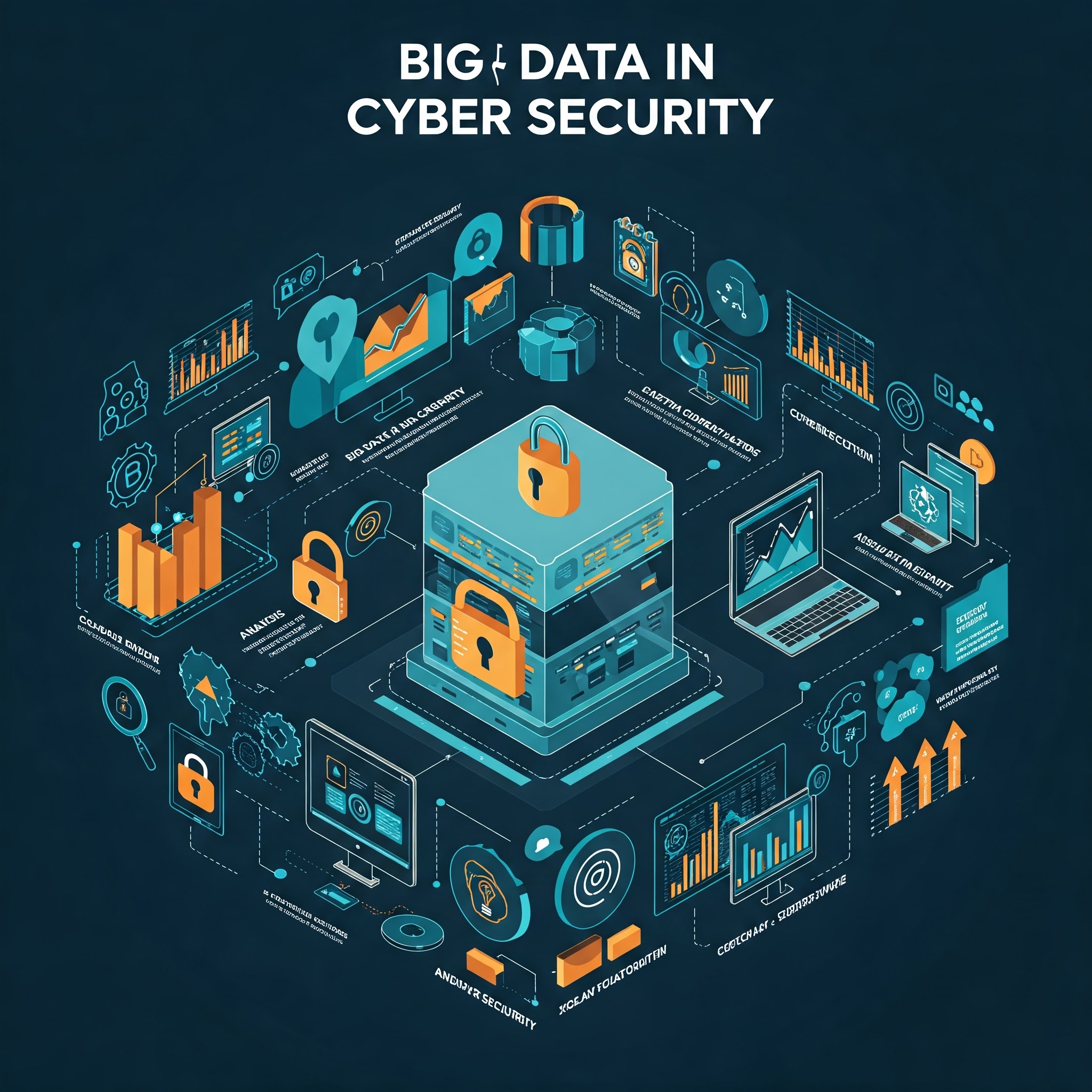
Big Data in Cybersecurityplays a crucial role in detecting, preventing, and responding to cyber threats by leveraging vast amounts of data from various sources, such as network traffic, system logs, and user behaviors. Cybersecurity threats have become increasingly sophisticated, and traditional methods are often insufficient to handle the scale and complexity of modern attacks. Big Data technologies provide the ability to analyze massive datasets in real-time, identify patterns, and detect anomalies that may indicate potential security risks. By analyzing large volumes of data, cybersecurity teams can gain insights into emerging threats, quickly respond to attacks, and enhance their overall security posture.
One of the key advantages of Big Data in cybersecurity is the ability to detect threats in real-time. With the help of advanced analytics and machine learning algorithms, security systems can process and analyze data from millions of events, logs, and activities to identify suspicious patterns. For example, big data analytics can monitor network traffic to detect unusual spikes or irregularities that could indicate a Distributed Denial-of-Service (DDoS) attack or unauthorized access attempts. Machine learning algorithms can also help detect zero-day vulnerabilities, or previously unknown threats, by analyzing historical data and learning to recognize subtle patterns that may signal an attack. This proactive approach allows organizations to mitigate risks before they escalate into full-blown security incidents.
Big Data technologies also enable predictive analytics in cybersecurity, where historical data is used to forecast potential future attacks or vulnerabilities. By analyzing data from past breaches, threat intelligence feeds, and system behavior, security teams can predict the likelihood of specific types of attacks, such as phishing, ransomware, or insider threats. This allows organizations to implement preventative measures, such as patching vulnerabilities or strengthening security controls, before an attack occurs. Additionally, Big Data platforms can integrate data from external sources, such as threat intelligence providers or global cybersecurity networks, to gain a broader view of the evolving threat landscape. This helps organizations stay ahead of emerging threats and adapt their security strategies accordingly.
Comments